
What every landowner should know about financial assurance and solar and wind decommissioning protections
One of the most common questions farmers and ranchers ask before signing a renewable energy lease is simple: What happens to my land when the project is done?
It is a fair question. A solar or wind lease can span 30 to 40 years or more. That is a multi-generational commitment, and you deserve to know that your property will be properly restored when the project reaches the end of its life.
The good news is that decommissioning is something you can plan for. With the right lease language and the right financial protections, you can enter an agreement with confidence. This article breaks down the key financial assurance mechanisms, the red flags to watch for and strategies for negotiating stronger protections.
What Does Decommissioning Involve?
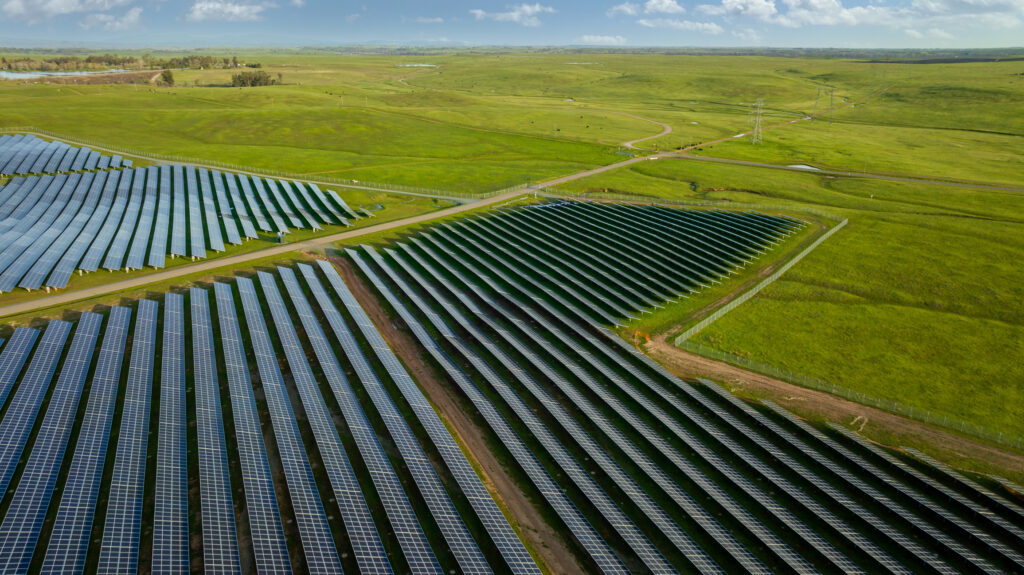
Decommissioning is the process of removing a renewable energy project and restoring the land once the project reaches the end of its operational life or is abandoned. For solar, this typically means removing panels, racking, inverters, electrical equipment, fencing and access roads, along with below-ground components to a depth of at least 36 inches. For wind, it involves dismantling turbines, towers and foundations.
After equipment is removed, the land needs to be restored through regrading, topsoil replacement, soil decompaction and reestablishment of vegetation. If your land was in agricultural production before the project, be specific about what “restoration” means in your lease. There is a meaningful difference between “reseeding” and “reestablishment of vegetation with a specified seed mix.”
The cost of decommissioning varies widely depending on project size, location and complexity. What matters most for landowners is not the exact number, but whether the money to cover it will actually be there when the time comes. That is where financial assurance comes in.
Financial Assurance: Your Safety Net
Financial assurance (sometimes called “surety”) is money or a financial commitment set aside to guarantee that decommissioning gets done, even if the developer runs into financial trouble. There are several common types.
- Surety bonds are guarantees from a third-party bonding company. If the developer fails to decommission, the bonding company steps in. These are among the most commonly used mechanisms because they provide strong protection without requiring large upfront cash commitments from the developer.
- Letters of credit are bank-issued guarantees to pay a specified amount if the developer defaults. They are publicly filed and easy to verify. Make sure any letter of credit is irrevocable (cannot be changed without your consent) and includes an evergreen clause for automatic annual renewal.
- Escrow accounts hold cash in a dedicated account managed by a third party, available to cover decommissioning if the developer defaults. Many leases allow phased deposits over the project life rather than full upfront funding.
- Parent company guarantees allow large, well-capitalized parent companies to guarantee they will cover decommissioning if their subsidiary cannot. These can be appropriate for major developers, but keep in mind that a company’s financial position can change significantly over a 25- to 30-year project life.
- Other mechanisms include trust funds and insurance policies, though these tend to be more complex and expensive to maintain.
Regardless of the type, your financial assurance should be based on an independent engineer’s cost estimate (not the developer’s), updated every five years and remain in place until all decommissioning and restoration work is verified as complete.
Red Flags in Decommissioning Clauses
Not all decommissioning language is created equal. Watch for these warning signs.
- Vague definitions. If the lease does not clearly define “decommissioning,” “abandonment” or “removal,” you could end up in a dispute about what the developer is actually required to do.
- No timeline for action. The lease should specify how long a project can sit idle before it is considered abandoned, and how quickly decommissioning must be completed after that point.
- Financial assurance that is too low or never updated. A fixed dollar amount with no provision for periodic review could be woefully inadequate 20 or 30 years from now.
- Over-reliance on salvage value. Allowing the developer to subtract estimated salvage value from the assurance amount without any cap is risky. Salvage markets are unpredictable, and what seems valuable today may not be in the future.
- No enforcement mechanism. Without clear language giving you or the local government the right to access the financial assurance and enter the property to complete decommissioning in the event of default, your protections are incomplete.
- Missing transfer provisions. If the project is sold, decommissioning obligations and financial assurance should transfer to the new owner. Without this, a sale could leave your land with no clear responsibility for cleanup.
Strategies for Strengthening Your Protections
Decommissioning terms are negotiable. Here are concrete steps you can take.
- Get independent advice early. Have the lease reviewed by someone who understands both renewable energy development and agriculture before you sign. An attorney experienced in energy leases can handle legal concerns, while a non-legal review can help you evaluate the business terms that make up the bulk of most lease agreements.
- Insist on specific restoration standards. Negotiate clear language about soil restoration, decompaction, vegetation reestablishment (including seed mixes) and removal of all infrastructure to a specified depth.
- Require an independent cost estimate with regular updates. Push for decommissioning costs to be estimated by a licensed engineer who is not affiliated with the developer, with updates every five years to account for changes in labor, disposal costs and salvage value.
- Negotiate the timing of financial assurance. A phased approach, where the developer builds the assurance over the first 10 to 15 years of the project, balances protection for you with financial feasibility for the developer. Some agreements start at 25 percent at commercial operation and scale to 100 percent by midpoint.
- Include strong default provisions. Make sure the lease states your right to access funds and enter the property to complete decommissioning if the developer fails to act within a specified timeframe.
- Address ownership transfers. Require that any sale or transfer of the project includes an assumption of all decommissioning obligations and financial assurance. The new owner should provide equivalent or better protections before the transfer is finalized.
- Consider negotiating with your neighbors. If multiple landowners are participating in the same project, coordinating your negotiations can provide stronger bargaining power and more consistent protections across the project footprint.
You Don’t Have to Navigate This Alone
Decommissioning is one of the most important parts of any renewable energy lease, and one of the areas where landowners are most likely to encounter unfamiliar terms and complex financial instruments.
REFA offers lease review services designed specifically for farmers and ranchers. These non-legal reviews focus on the business and agricultural aspects of your lease, including decommissioning provisions, payment structures, land use impacts and construction timelines. The service is delivered through REFA’s partnership with Pinion Global, a leading advisory firm specializing in food and agriculture. Whether you are evaluating your first offer or revisiting an existing agreement, REFA can help you understand what you are signing and identify where your protections could be stronger.
Your land is your legacy. Taking the time to get decommissioning right today means protecting it for the next generation.