What the numbers show about where large scale solar makes sense
Land has always paid in more than one way. A crop this season, grazing the next, and now, for a growing number of landowners, power generation alongside both.
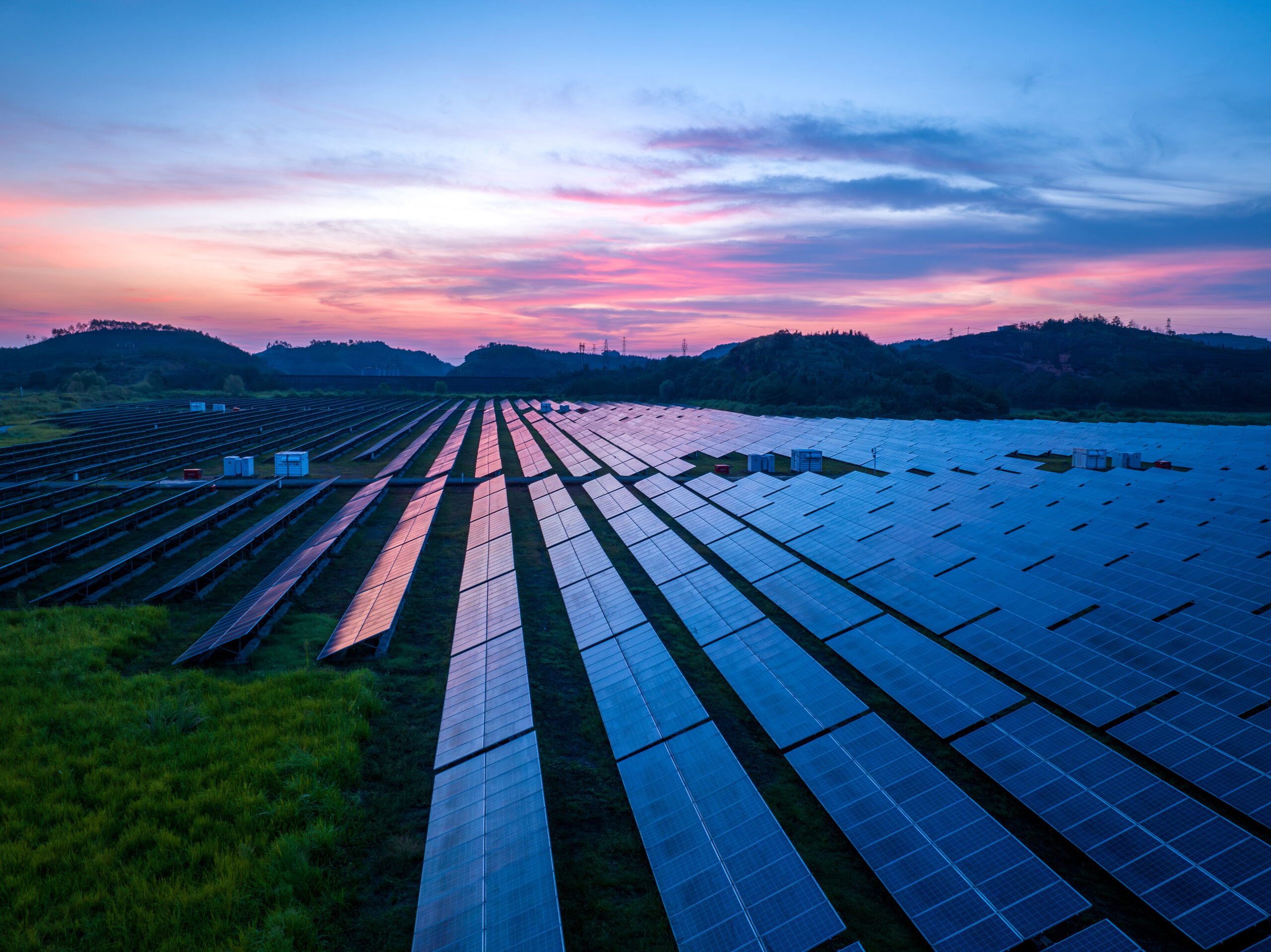
That appeal is drawing utility-scale solar onto open acreage across the country.
It also raises a fair question: if the goal is more renewable energy, why does it need so much land when the U.S. has so many rooftops and parking lots?
The answer comes down to economics, engineering and scale. Rooftops have value, but they were never sized to meet the country’s electricity demand. Open land fills a gap that rooftops cannot.
Solar’s Footprint on Farmland Is Small
Solar development on agricultural land today is small by any direct measure. Ground-mounted solar occupies roughly 550,000 to 730,000 acres nationwide, depending on whether you count the panel footprint or the full project area. Against 874 million acres of total U.S. farmland, that works out to about 0.08%.
Even under the Department of Energy’s most land-intensive 2050 scenario, solar would affect less than 1.2% of existing farmland.
That does not mean siting is irrelevant. American Farmland Trust projects a more solar-intensive future and recommends steering development toward land less suited for farming. At REFA, that is exactly why site selection and lease terms belong in the conversation from the start.
Bigger Projects Cost Less and Strain the Grid Less
The economics and engineering both favor concentrating solar in one large facility rather than scattering it across rooftops and parking lots.
One utility-scale project means fewer landowner agreements, one environmental review and one interconnection request. The same capacity spread across rooftops means thousands of separate owners, structural retrofits and individual hookups into a distribution grid designed to carry power one way, not absorb thousands of small two-way connections.
The cost difference is significant. According to Lazard’s 2025 analysis, utility-scale solar costs $38 to $78 per megawatt-hour. Rooftop solar runs roughly double that, around $140 per megawatt-hour. Parking-lot carports cost even more because a carport means engineering a structure to hold panels over cars.
The market reflects this difference. In 2025, the U.S. installed 34.7 gigawatts of utility-scale solar versus 8.4 gigawatts across residential, commercial and community solar combined. That is roughly four to one.
Rooftop Solar Has Real Value
Rooftop solar deserves credit for what it does well. Power generated on a rooftop gets used right there, avoiding transmission losses. Homeowners cut their bills and, paired with batteries, can keep essential loads running during outages. Rooftop output peaks alongside afternoon air-conditioning demand, easing local grid strain on hot summer days.
But rooftop solar runs into limits that utility-scale does not.
Limited reach. A typical home system powers that one home, not the schools, hospitals and factories nearby. Not every roof qualifies. Orientation, shading, structural condition and permitting rules all narrow the pool.
High costs. The average residential install runs about $21,000 to $25,000 before incentives. Permitting and interconnection add costs and delays. A single week of permitting delay drives 5-10% of customers to cancel their projects entirely.
Utility resistance. Distributed rooftop solar decentralizes a business model utilities have run for a century. More than a dozen states have scaled back or ended net-metering policies over the past decade.
None of this erases rooftop solar’s value. But fixing these problems requires rewriting financing rules, permitting codes and utility business models nationwide. Utility-scale solar already works today at the scale the country needs.
Electricity Demand Keeps Climbing
Even the best-case rooftop solar estimate from the National Lab of the Rockies (NLR) was never enough. If every usable rooftop had solar, NLR estimated it could supply about 39% of national electricity. But that was measured against 2013 demand. Against 2024’s actual consumption, that ceiling covers only about 34%. The Energy Information Administration projects demand will keep climbing.
Data centers are driving much of the growth, but not all of it. Grid Strategies reports that industrial reshoring, electrification and oil and gas operations account for roughly 45% of forecasted five-year peak demand growth. Rooftop and parking-lot solar do not reach those load categories.
What This Means for Landowners
Rooftops and parking lots are part of the energy mix, but they were never sized to replace utility-scale solar.
This math is not likely to flip. Rooftop solar costs and regulatory barriers are national-level challenges that will not be solved at the county level. A permitting condition demanding rooftop solar instead is not a credible substitute for a proposed utility-scale project.
Land leased for utility-scale solar remains one of the more reliable uses of marginal or underused acreage available today. That does not change because someone at a public hearing would prefer panels on a big-box store roof.
And solar sites can keep earning through dual use. A 2024 census counted nearly 130,000 acres of solar sites still grazed by sheep. REFA members negotiating leases have evidence-backed grounds to ask about grazing or agrivoltaic provisions.
What Landowners Should Remember
Solar’s farmland footprint is small: about 0.08% of U.S. farmland today, with projections staying below 1.2% even in aggressive scenarios.
Economics favor utility-scale. Costs run roughly half of rooftop solar per megawatt-hour, with four times the annual installation volume.
Rooftops cannot meet total demand. Even with full buildout, rooftop solar would cover about a third of current electricity use, and demand is growing.
Ready to Make an Informed Decision?
If you have been approached about hosting a solar project on your land, you are not alone in weighing the options. REFA members get access to independent guidance on lease terms, site selection and dual-use opportunities. Informed landowners make better decisions.