What to know about runoff, drainage and erosion
A solar lease is a 25- to 30-year commitment, and for many landowners, questions about runoff, drainage and erosion top the list of concerns going in. You’ll still be the one farming around it, living downstream from it and fielding questions from neighbors about what it’s doing to the watershed. So before any equipment rolls in, it’s worth understanding exactly how a solar installation changes the way water moves across your land and what separates a well-managed site from a problematic one.
Do Solar Panels Cause Runoff and Erosion?
Unlike a crop canopy or a pasture, solar panels are completely impervious. Rain that hits them runs straight off the panel edges, concentrating at what researchers call the “dripline,” the strip of ground beneath the low edge of each row of panels.
A year-long Penn State field study found that dripline zones had soil moisture roughly 19% higher than surrounding land, while the ground directly under panels was about 25% drier because panels block rainfall entirely. This uneven moisture distribution is real and unavoidable. But the Penn State team, studying sites on slopes up to 30%, found no evidence of problematic runoff or erosion at either location. The key was what happened in the spaces between rows.
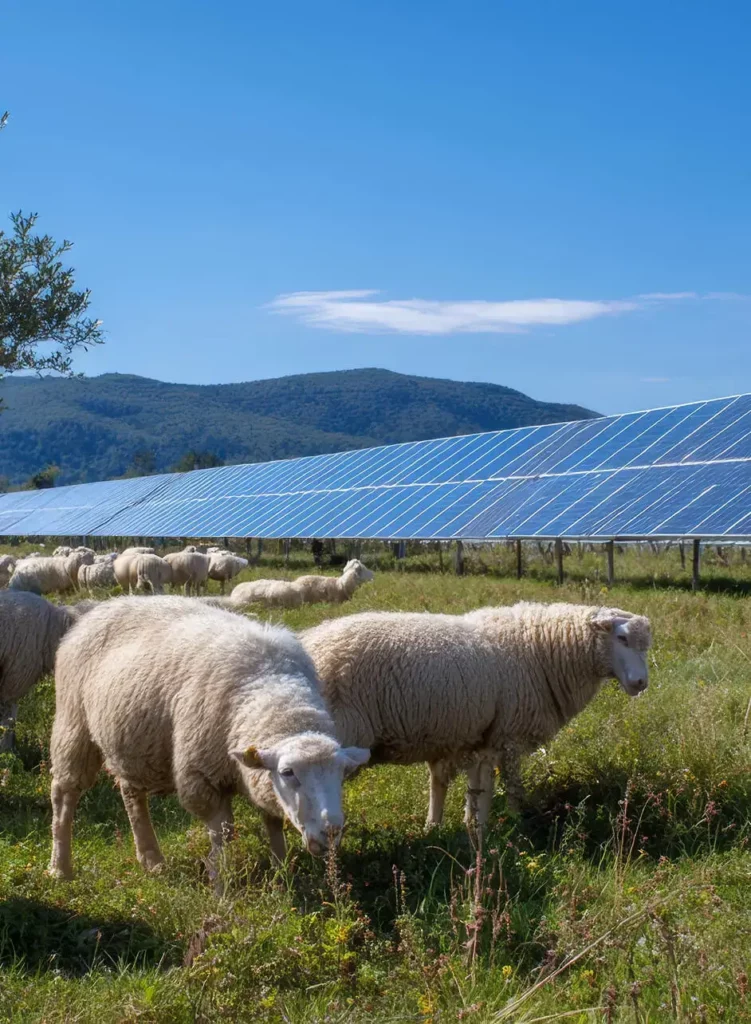
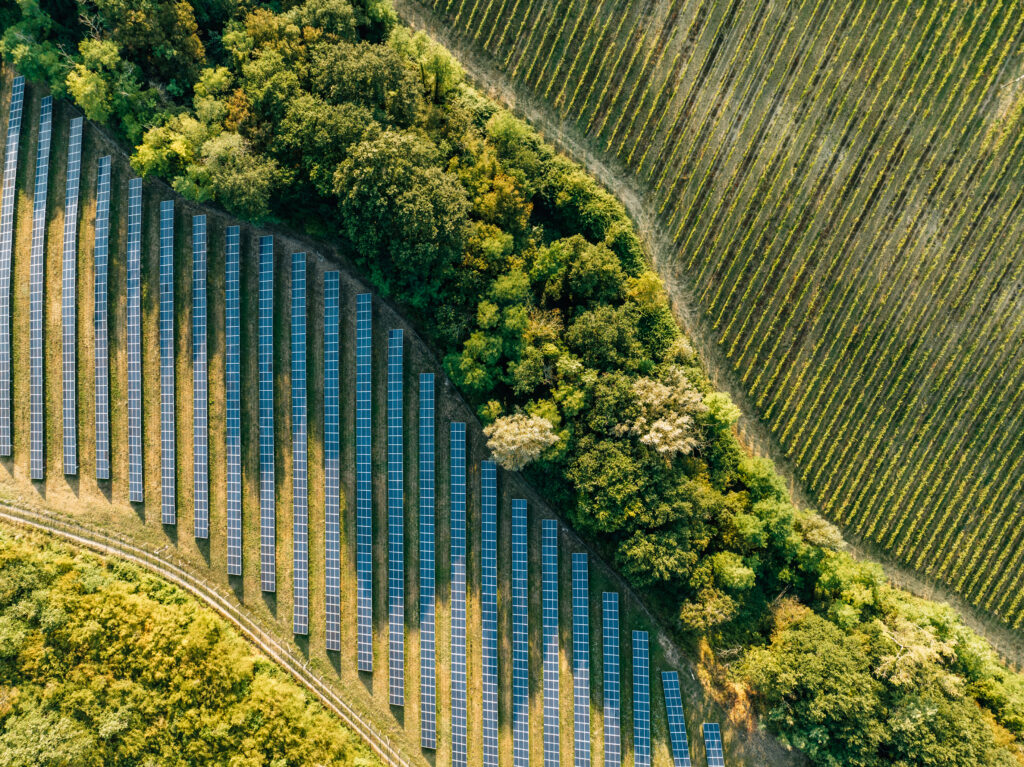
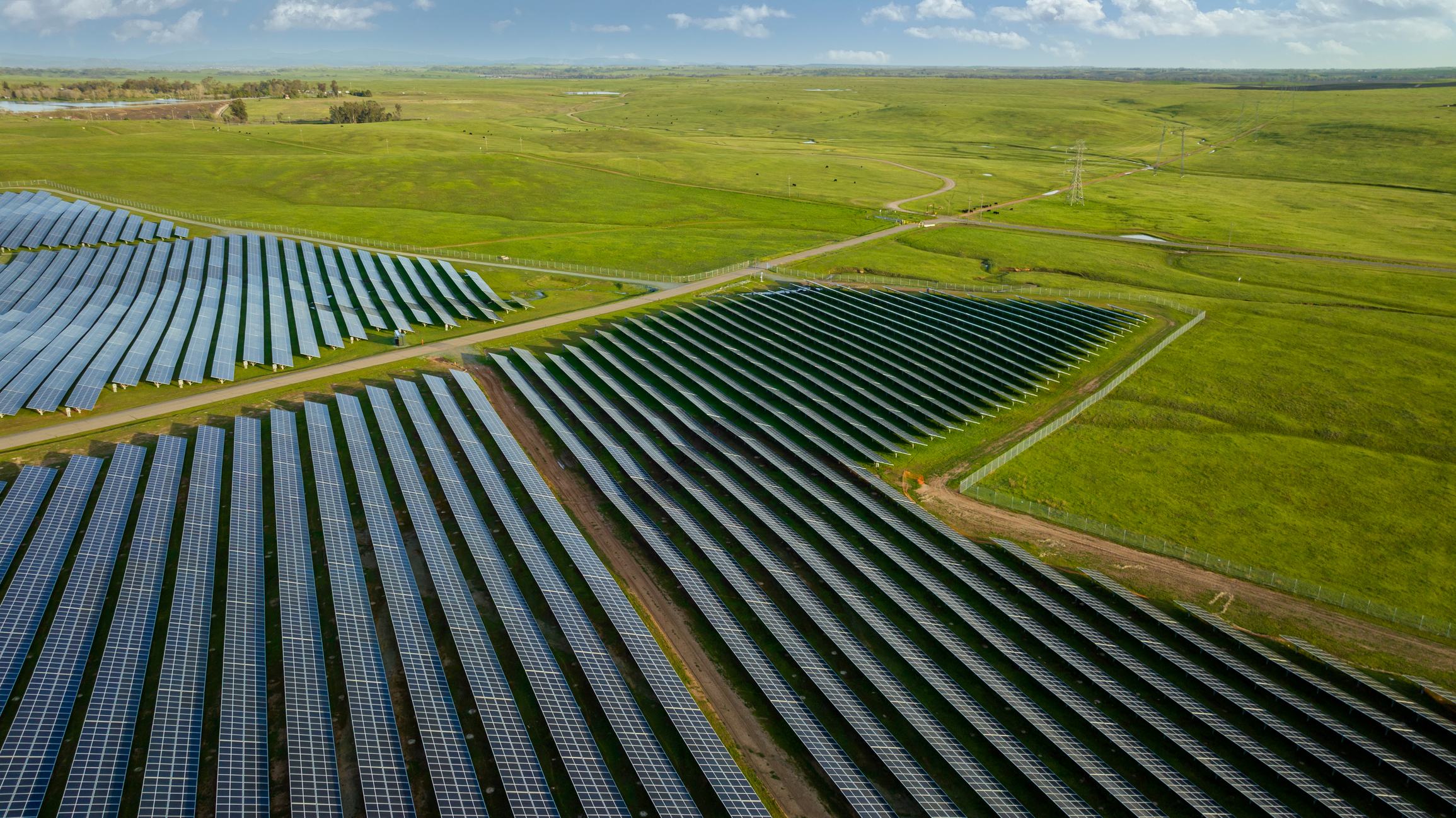
The open, vegetated strips between panel rows — called the interspace — act as the site’s primary water management system. When functioning correctly, they absorb the concentrated dripline runoff before it builds momentum. Penn State researchers found that moisture readings in the interspace were often indistinguishable from undisturbed reference sites nearby. In other words: with adequate spacing and healthy vegetation, the land between the rows largely behaves like it always did.
The catch is that none of this happens automatically. It requires intentional design.
The Real Risk: Construction, Not Operation
Most of the water-related damage that happens on solar sites doesn’t come from panels in operation, it comes from construction. Heavy equipment compacts soil, grading disrupts natural drainage patterns and bare disturbed ground is highly vulnerable to erosion before any vegetation gets established.
The American Farmland Trust’s Solar Soil Health Guide cites research that identifies soil compaction as the single most important factor for stormwater management and water quality at solar sites. Compacted soil can’t absorb water efficiently, which means runoff that would have infiltrated on your healthy ground now moves across the surface instead, picking up sediment, heading downslope and potentially causing the drainage and erosion problems you were worried about in the first place.
This is why construction practices matter as much as panel layout. The USDA NRCS Conservation Considerations for Solar Farms lays out what good construction looks like:
- Limiting machinery traffic to designated lanes
- Avoiding operation in wet conditions when soil is most vulnerable
- Avoiding grading whenever possible or keeping topsoil and subsoil separate during any grading
- Establishing perennial vegetation before construction where possible to give roots a head start
What Good Water Management Looks Like on a Solar Site
The difference between a solar site that protects your land and one that damages it usually comes down to a handful of design and management decisions made early in the project. The NRCS and SolSmart both recommend what to look for:
Adequate row spacing. The NRCS recommends the vegetated distance between panel rows be no less than the maximum horizontal width of the panels themselves. This gives dripline water room to infiltrate before it can accumulate and move. Narrower spacing is where problems start.
Healthy, maintained ground cover. Vegetation is the foundation of everything. Bare ground under panels — from poor establishment, overgrazing or herbicide overuse — removes the site’s primary erosion control. NRCS guidance suggests planting low-growing perennial species that are shade- and drought-tolerant, since conditions under and between panels vary widely. Stormwater and erosion control permits for solar sites typically require approximately 80% groundcover, but the best-managed sites treat that as a floor, not a goal.
Engineered stormwater controls challenging terrain. The Penn State study examined sites on 25–30% slopes (which are significantly steeper than most farmland) and found that infiltration basins and gravel-filled infiltration trenches effectively managed runoff in both cases. The infiltration basins at the steeper site captured runoff across 84 rain events over 247 days without coming close to capacity. On flatter ground with healthy vegetation, these structures may not be necessary, but on steeper or more erosion-prone sites, they should be non-negotiable.
Soil monitoring over time. Plan to do annual soil health testing for the first five years of a solar project, then every three to five years. Healthy soils improve with good management; degraded ones can spiral in ways that are hard and expensive to fix once panels are in place.
Questions to Ask Before You Sign
It’s important to make sure these best practices are written into your lease so your land is protected. Here’s what to push for:
- What is the stormwater management plan? Ask to see it. It should specify how runoff will be controlled during and after construction, and what structures will be installed.
- What are the row spacing and groundcover requirements? Get specific numbers, not general language about “maintaining vegetation.”
- Who is responsible for vegetation maintenance, and what standard must they meet? Make sure ongoing maintenance obligations are spelled out, not just establishment requirements.
- How will existing drainage infrastructure be protected? Tile lines, field ditches and natural waterways on your property should be explicitly protected in the lease.
- What does decommissioning require? The land should be required to return to agricultural productivity, including restoration of soil health and drainage function.
- Will soil be tested before construction, and who gets those results? A baseline soil health assessment protects you if you need to demonstrate degradation later.
The Bottom Line on Solar Site Water Management
A well-designed, well-managed solar site does not have to create runoff or erosion problems, even on terrain that seems more prone to these issues. The experts converge on the same list of practices that make it work: adequate row spacing, healthy perennial ground cover, soil compaction prevention during construction and engineered stormwater controls where terrain demands them.
Hold developers to these standards from the start, and a solar lease doesn’t have to mean 25 to 30 years of worrying about what’s happening to your land. It can mean 25 to 30 years of lease income on ground that stays healthy, drains well and comes back to you in good shape.
Stormwater management, drainage protections and soil restoration requirements should all be clearly addressed before you sign a lease. REFA helps landowners review renewable energy agreements and connect with experienced advisors who understand how to protect agricultural land for the long term. Sign up to be a member today.