By Jeff Risley, REFA Executive Director
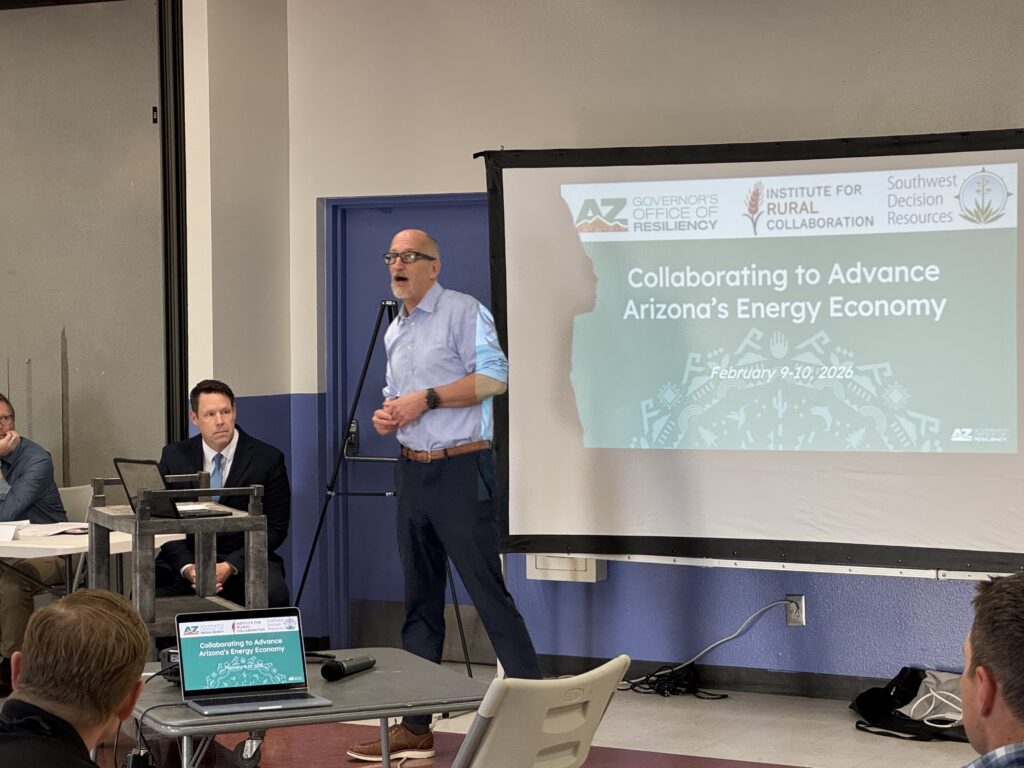
This week I had the opportunity to participate in a workshop in Tucson that was a great example of how states could approach community engagement for renewable energy development. The Collaborating to Advance Arizona’s Energy Economy workshop brought together landowners, tribal representatives, developers, county officials, and community advocates for a frank discussion about what community engagement should look like when renewable energy projects come to town.
Why This Workshop Matters
If you’ve followed renewable energy development in rural America, there is sometimes an unhelpful pattern: a developer announces a project, neighbors find out through the grapevine, opposition forms, and what could have been a productive conversation becomes a battle. The technical term researchers use is the “social gap”: the difference between broad public support for renewable energy and local opposition to specific projects.
Arizona is trying to close that gap, and they’re doing it the right way: by bringing stakeholders together to develop best practices that can be used statewide.
The workshop was co-hosted by the Institute for Rural Collaboration (IRC) and the Arizona Governor’s Office of Resiliency. IRC is a nonprofit that helps rural communities navigate complex public conversations through collaborative learning processes. The Governor’s Office of Resiliency brings water, land use, transportation, and energy policy together under one umbrella. Together, they’re working to develop a strategic plan for community engagement that could serve as a template for other states.
Getting Away from ‘Decide, Announce, Defend’
One of the background documents for the workshop was a literature review titled “Getting Away from DAD.” DAD stands for Decide, Announce, Defend: a traditional approach where decisions are made behind closed doors, announced to the public, and then defended against criticism. It may seem efficient for the decision-maker, but it treats community members as obstacles rather than partners.
The research is clear: DAD doesn’t work for renewable energy development. When communities feel blindsided or ignored, opposition hardens. Projects get delayed, costs increase, and sometimes viable projects die altogether. More importantly, communities miss opportunities to shape projects in ways that could benefit them.
The alternative is collaborative engagement: bringing stakeholders to the table early, listening to their concerns, and working together to find solutions that balance multiple interests. This doesn’t mean every project gets approved or that every concern gets resolved to everyone’s satisfaction. But it does mean that decisions are made with full information and that community members have a genuine voice in the process.
Practicing What They Preach
What struck me most about the Tucson workshop was that the organizers followed their own best practices. This wasn’t a presentation where officials talked at attendees. It was a genuine dialogue where every voice mattered.
The room included tribal representatives, county supervisors, agricultural advocates, environmental groups, and renewable energy developers. The facilitators from Southwest Decision Resources created space for each perspective to be heard and respected. When disagreements surfaced, they were acknowledged rather than dismissed.
Several specific ideas emerged that will make their way to the Governor’s office for the strategic plan. Three stood out to me:
- Ensuring all community members are heard: Not just the loudest voices, but landowners, Indigenous communities, marginalized groups, local businesses, and everyday residents. Good engagement means intentionally reaching people who might not show up to a public meeting on their own.
- State grants for professional facilitation: Local communities often lack the resources or expertise to manage complex public conversations. The idea of providing state grants to hire professional facilitators could help communities and developers orchestrate effective engagement programs without putting the financial burden on either party alone.
- Community benefit planning: Rather than waiting for developers to propose benefits, communities could proactively develop their own benefit plans. When a developer comes knocking, the community already has a clear vision of what they want, ready to negotiate as part of a community benefit agreement.
The Research Behind Better Engagement
The workshop drew on substantial research by Dr. Jessica Western, Principal at Big Goose Creek Resolutions and an Adjunct Professor and Research Associate at the University of Wyoming about what works and what doesn’t in renewable energy engagement.
Effective engagement starts early, before project details are finalized. It provides accurate, accessible information without overselling or dismissing concerns. It creates multiple channels for input, recognizing that not everyone will attend a public meeting. And it follows through. When communities raise legitimate concerns, those concerns get addressed, not just acknowledged.
What This Means for Landowners Nationwide
At REFA, we talk a lot about property rights and the importance of landowners making informed decisions. Community engagement might sound like something that happens to landowners rather than something they participate in. But that shouldn’t be the case.
Good community engagement protects landowner interests, too. When projects move forward with community support, they’re more likely to succeed. When communities have a voice in project design, they can advocate for terms that benefit local landowners. And when the engagement process is transparent, landowners get better information to make their own decisions.
Arizona’s approach is worth watching because it puts landowners and rural communities at the center of the conversation. The state isn’t dictating how projects should work. It’s creating a framework where local stakeholders, including landowners, can shape outcomes in their communities.
Looking Forward
The ideas generated at the Tucson workshop (and a Phoenix workshop the day before) will inform Arizona’s strategic plan for community engagement in renewable energy development. REFA will continue to follow this process and share lessons that could apply to landowners in other states.
If your state is working on similar initiatives, or if you’ve seen community engagement done well or poorly in your area, we want to hear from you. The more examples we can gather, the better we can help landowners everywhere navigate the opportunities and challenges that come with renewable energy development.